What a Church Newsletter Can Teach About Local History
Written by Miriam Coates ·
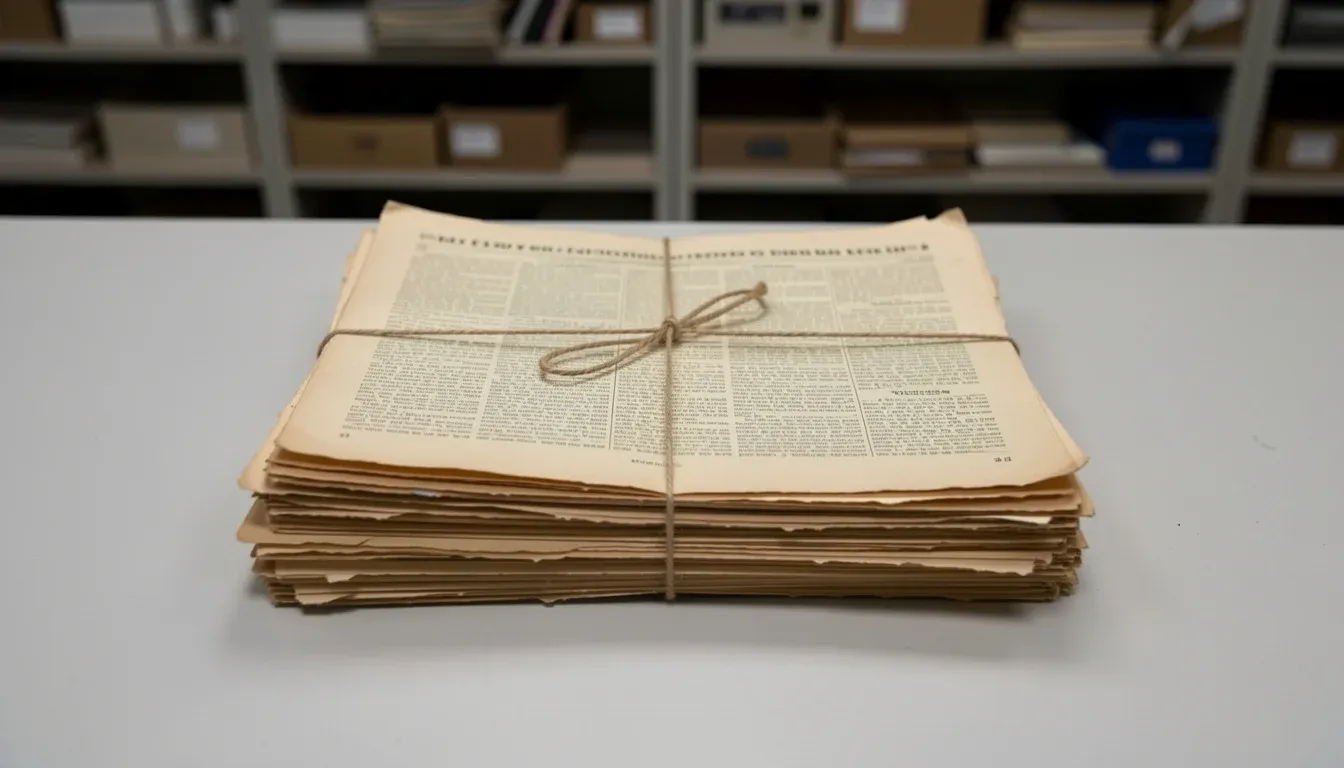
What a church newsletter actually is
A church newsletter is a short, regular publication, usually a few pages, that tells members what is happening: worship times, meetings, births and illnesses, a note from the pastor, and a request for help with the parking lot. Most congregations have printed one for decades, and many still do, either on paper or as a file passed along by email. For a small town, that stack of bulletins and newsletters can be one of the most detailed records of ordinary life that exists. The reason is simple. A newspaper covers the courthouse, the high school game, and the big fire. A church newsletter covers the Tuesday circle meeting, the new furnace, the summer picnic, and the family who moved away in March. Those smaller details are exactly what historians often lack.
How to read one for local history
You do not need training to get something out of an old newsletter, but a few habits help. Start with the masthead, the part near the top that lists the pastor, the clerk, the music director, and the custodian. Those names tell you who held which job and when, and you can compare them against other years to see how long people stayed.
Then look for things that change slowly and reveal the town around the church:
- Addresses and phone numbers. A church office number with a short exchange tells you something about when telephone service was organized. A street address tells you where the congregation sat.
- Service and meeting times. Shifts in these times often follow changes in the work schedules of the people who attended.
- Advertisements. Many small newsletters carried ads from local stores, feed suppliers, funeral homes, and garages. Those businesses are often gone, but the ads prove they existed and where they were.
- Notices about repairs and building projects. A note asking for donations toward a new roof or heating system dates a building event and sometimes names the contractor.
- Obituaries and memorial notes. These can give dates, family connections, and the names of relatives who lived nearby.
- References to other churches and events. Joint services, revivals, and presbytery meetings show how congregations related to one another.
Write down what you find with the date and the issue number. A single notice means little. The same name appearing across ten years of issues means a great deal.
Common misconceptions
The first misconception is that a church newsletter only matters to members. In practice, outsiders often find it useful. A newcomer researching a farm, a road, or a family name may find more in a parish bulletin than in any county record, because the church kept track of people the county did not.
The second is that old newsletters are fragile and therefore not worth the trouble. Many are sitting in a closet or a file drawer in good enough condition to read. Paper that has been kept dry and out of direct light can last a long time. Photocopy or photograph anything you plan to handle often.
The third is that a newsletter tells the whole story. It does not. It reflects what the congregation chose to print, and it leaves out conflicts, disagreements, and people who stopped coming. Read it alongside other sources, such as minutes, town records, or the local paper, before drawing conclusions.
The fourth is that online material replaces paper. Church websites change, and their older versions can disappear. The Internet Archive's Wayback Machine keeps dated captures of many sites. A 2010 capture of one local Presbyterian congregation's site, for example, showed separate sections labeled Current News, Archives, and History, which is the kind of structure that points you toward older material. The most recent capture I could read, though, showed only a bot verification screen, which is a reminder that archived pages can be incomplete or blocked.
Where to go next
If you want to start your own search, begin with what is already close at hand. Ask whether the congregation keeps a box of past bulletins, a scrapbook, or a set of bound volumes. Many do, and the people who maintain them often know which years are complete and which are missing. Next, check the local library or historical society. Libraries in small Virginia towns sometimes hold microfilm of area newspapers, and those papers often printed church announcements that match up with the newsletters you find. Local historical societies may have indexes, photographs, or oral histories that help you put the dates and names into context. Finally, keep notes in one place. A simple spreadsheet with columns for date, source, name, and topic will save you hours later. The newsletter is only useful if you can find the detail you need when you come back to it.
For background, Wikipedia has good entries on Local history and Oral history.