Why Hymn Numbers Matter and How to Find Them Fast
Written by Miriam Coates ·
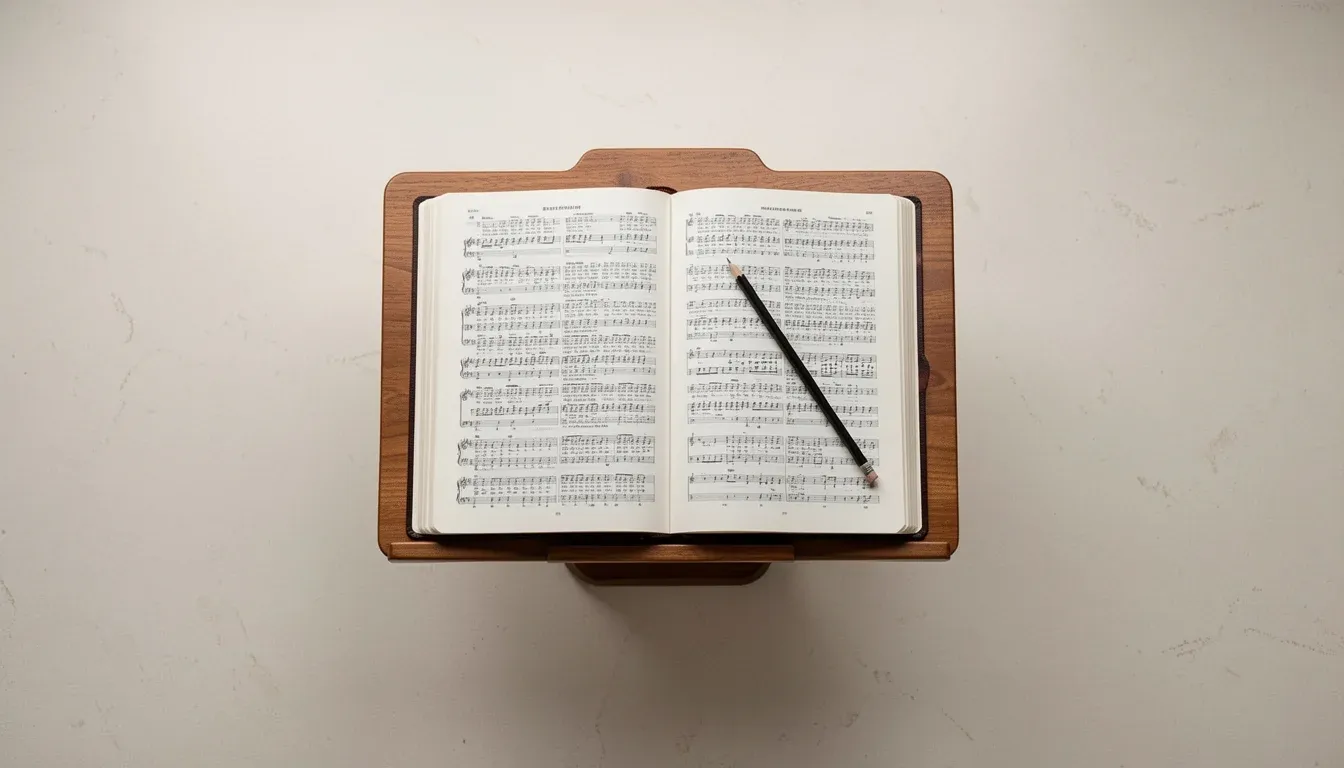
What a hymn number actually is
A hymn number is a catalog position. It tells you where a hymn sits in the collection, not which page you will land on when you open the book. In most pew hymnals the numbers run in order from the first hymn to the last, and the page numbers are a separate sequence. That difference trips up almost every newcomer. You flip to the number you were given, find the page is wrong, and assume you have the wrong book. You probably have the right book. The number is just doing a different job.
The numbering also tends to be grouped by theme. Early hymns often cover praise and God's nature, middle sections move through the church year, and later sections collect hymns for communion, baptism, funerals, and the closing of worship. Knowing that rough order can help you guess where a hymn is before you check the index.
How to find a number quickly
The fastest route depends on what you already know about the hymn. If you know the number, the job is easy: look for the number at the top of the page or at the head of the hymn, since numbers are usually printed large and near the title. If you only know the first line, go to the first-line index at the back. It is alphabetical by opening words, so "Holy, holy, holy" sits under H, not under the word "Lord" that appears later in the text.
If you know the tune but not the words, check the tune index. Hymnals list tunes by name, and a single tune often serves several texts. That matters more than people expect. The tune name printed under a hymn tells you what melody to sing, and a congregation may use the same melody for two or three different poems. If your bulletin shows a tune name without a title, the tune index gives you a starting list, and you can narrow it by the words you see on the board.
When you know only the meter, the metrical index is the tool. Meter is the pattern of syllables per line, written as numbers like 8.8.8.8 or 6.6.8.6.8.6. Hymns with the same meter can be sung to the same tune, so this index is useful when a hymn is unfamiliar but the tune is one you already know. Common meter, long meter, and short meter are the names most people hear, and they cover a large share of older hymns.
Common misconceptions
The first misconception is that the number on the hymn board is a page number. As above, it usually is not. The second is that every hymn in the book is sung at every service. Many congregations use a selection, and the printed collection is larger than what gets sung in a given month. Ask around before you assume a hymn you know is being skipped on purpose.
A third misconception is that the bulletin always lists hymns in order of use. It usually does, but the printed order can change when the pastor or music director makes a substitution on the day. If the board and the bulletin disagree, the board is often the more current source. Someone at the front of the sanctuary can confirm it quickly.
The last one is the belief that hymnals are the same from one congregation to the next. Different denominations and editions number their hymns differently. A number that brings you straight to the right hymn in one book may point to something entirely different in another. Check the title page of the hymnal in your hand if you are moving between churches or borrowing a book.
Where to go next
If you want to get comfortable with hymnals, start with one book and learn its layout. Spend a few minutes with the table of contents, then the first-line index, then the tune index. Once you know where those three lists are, you can find almost any hymn in under a minute, even when the number is not printed where you expect it.
For the tunes themselves, it helps to listen before you sing. Many hymn tunes have been recorded many times, and a short recording can tell you whether a melody is slow and stately or quick and bouncy. Singing a hymn you have heard once is much easier than sight-reading a new tune in the middle of a service. Ask someone in the choir or the pew beside you which hymns they like to sing, and you will often learn a few numbers you can find in a hurry the next time you visit.